

Top 5 Never-Completed Dubai Projects
Introduction
Dubai is known for visionary megaprojects that reshape its skyline and economy. Alongside many successful developments, several high‑profile projects were paused, scaled back, or reworked before full completion. This newsletter reviews five of those notable projects, summarising their original vision, what made each unique, why they were not completed as planned, and the current status based on official developer or authority communications where available.
1. Arabian Canal
Brief description:
The Arabian Canal was envisioned as a monumental man-made waterway reshaping the southwest of Dubai, United Arab Emirates. Construction began in 2008 but was placed on hold in 2009 following Dubai’s financial crisis.
The project’s scale was extraordinary a 75 km artificial canal surrounded by a new urban region of roughly 140 square kilometers, planned to accommodate around 1.5 million residents.
The total estimated cost for the canal infrastructure alone was USD 11 billion, making it one of Dubai’s largest proposed engineering projects.
Highlights:
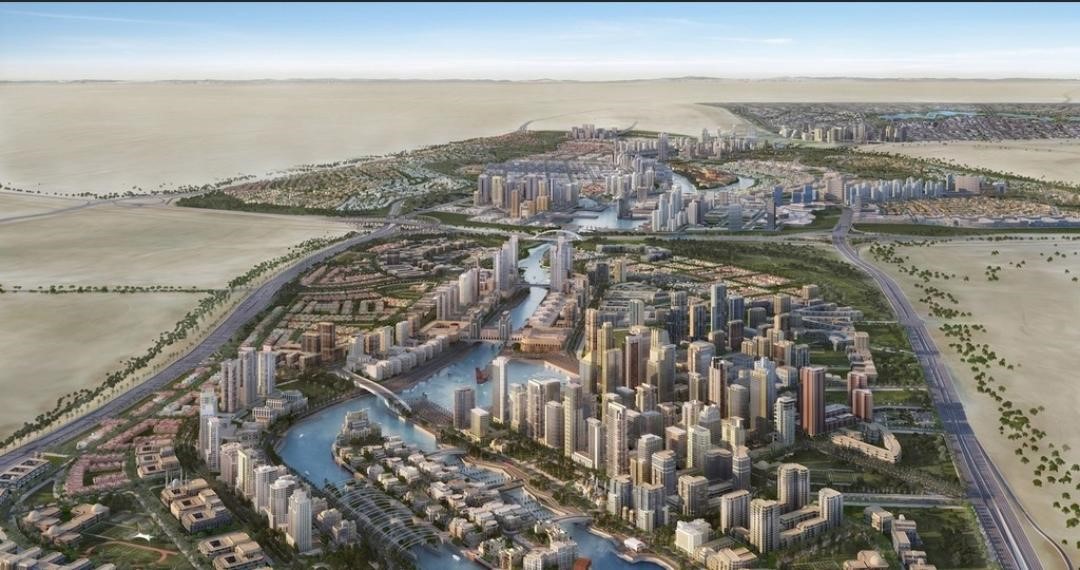
The Arabian Canal was designed as a real estate-driven waterway, not a commercial shipping route. It would begin at the Dubai Waterfront, extend 75 km inland through the desert, and return to the Persian Gulf west of Dubai Marina.
The canal’s width ranged from 75 to 150 meters with a depth of about 6 meters, suitable for leisure boats up to 60 meters in length.
Its 140 km² urban corridor was planned for high-density clusters, terraced plots, and artificial slopes, creating varied waterfront views. The landscape would feature raised embankments, sculpted hills up to 200 meters, and a dramatic skyline along the canal.
Key engineering elements included landmark bridges, a 900-meter tunnel section, and over 1 billion cubic meters of excavation, making it one of Dubai’s most ambitious inland developments.
Reasons for pause:
The global financial crisis of 2008–2009 hit Dubai’s property market, severely affecting liquidity and investor confidence. With the city’s financing mechanisms disrupted, work on the Arabian Canal was halted after initial excavation and bidding phases.
At the time, only a test cut (700 m x 200 m, up to 45 m deep) and a first 9 km construction package (valued at around USD 2.1 billion) had begun.
The project’s dependency on continuous land sales and development cycles made it vulnerable to market volatility. Additionally, technical and environmental concerns such as the risk of stagnant seawater circulation in inland segments added further complexity.
Current status:
As of 2025, the Arabian Canal remains suspended, with no official reactivation or redevelopment announced by Limitless or Dubai Holding.
The canal was designed without locks or pumping systems, relying solely on seawater inflow from the Gulf a factor that drew criticism regarding long-term sustainability. Today, the Arabian Canal stands as one of Dubai’s most ambitious, yet unrealized megaprojects partially initiated, technically planned in depth, but never completed under its original timeline.
Highlights:
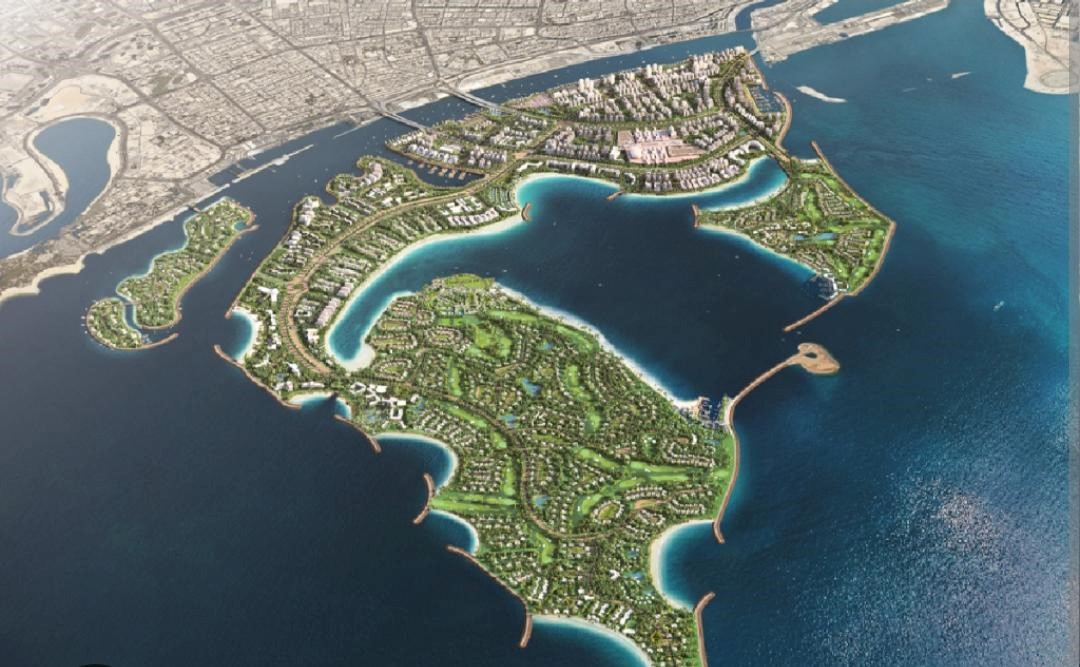
The Dubai Islands master development spans 17 square kilometers across five interconnected islands.
It adds more than 20 kilometers of new beachfront to Dubai’s coastline, strengthening the city’s position as a global leisure and hospitality destination.
Key hospitality components already completed include the RIU Dubai and Centara Mirage Beach Resort Dubai, with a total of more than 80 hotels planned.
Retail and entertainment highlights include the ambitious Deira Mall and the Deira Night Souk, inspired by traditional Arabian markets.
Residential offerings feature a blend of apartments, townhouses, and villas designed for waterfront living, complemented by smooth connectivity through the Infinity Bridge and other crossings linking the islands to the mainland.
Reasons for pause:
The original Palm Deira concept was impacted by the 2008 global financial crisis, which caused widespread disruption in Dubai’s real estate market. As a result, large-scale reclamation and construction activities were suspended.
Market conditions, along with strategic and environmental considerations, prompted Nakheel to revisit and restructure the project scope in the following years.
Current status:
Most recently, in August 2022, Nakheel rebranded the project once again as Dubai Islands, revising the master plan to include over 80 hotels and resorts. Now re-envisioned as Dubai Islands, the development represents a modernized version of Nakheel’s original vision. Several components, particularly hotels and public infrastructure are operational, while ongoing phases focus on expanding hospitality, retail, and residential offerings.
3. Universe’ Islands (related to The World / island schemes)
Brief description:
Announced in 2008 by Nakheel Properties, the Universe Islands Project was envisioned as one of Dubai’s most ambitious man-made archipelagos, designed to mirror the Milky Way and the Solar System. The project aimed to expand Dubai’s coastline and reinforce its global identity as the epicenter of futuristic real-estate innovation. Strategically located near Palm Jumeirah and The World Islands, it was planned as a luxury destination for high-end residences, resorts, and leisure experiences.
Highlights:
The development’s master plan featured a constellation-inspired layout. Each island represents a celestial body or planetary form. The concept blended artistry and engineering, pushing the boundaries of land reclamation with cutting-edge marine infrastructure. The project promised bespoke villas, private beaches, and luxury marinas, all connected by navigable waterways and designed for elite tourism and waterfront living. Its design was intended to position Dubai as a global leader in iconic offshore developments.
Reasons for pause:
Just a year after its announcement, the global financial crisis of 2008 severely impacted Dubai’s real-estate sector. Facing market contraction, funding challenges, and shifting investor priorities, Nakheel officially shelved the Universe Islands Project in 2009. The development was quietly removed from the company’s project portfolio and never advanced beyond the conceptual and planning stages. Rising construction costs, coupled with environmental and logistical complexities, made the project financially unsustainable at the time.
Current Status
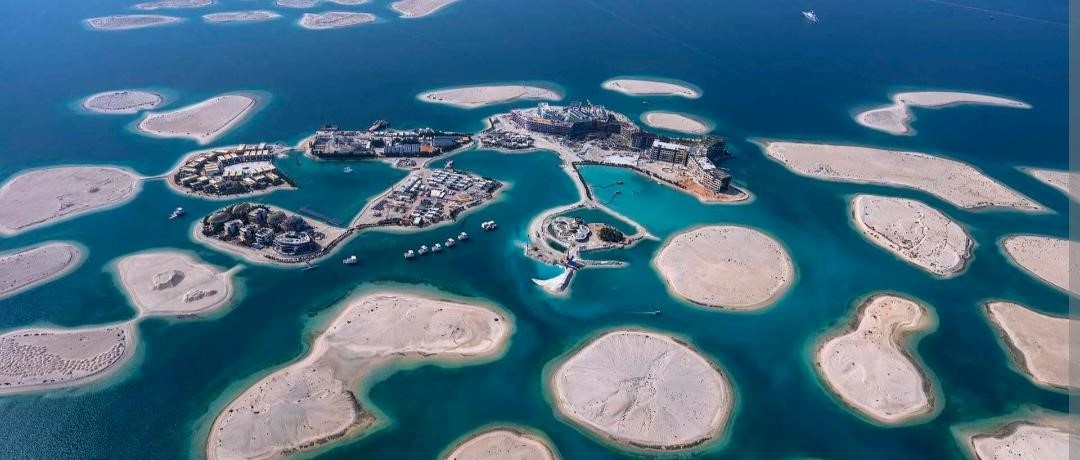
The Universe concept remains unbuilt, and Nakheel has not announced any revival plans for it. However, the project is often confused with The World Islands another Nakheel creation which, unlike The Universe, reached partial completion. The World comprises around 300 islands shaped like a world map and, after years of dormancy, is witnessing selective redevelopment. Projects such as The Heart of Europe and the Anantara World Islands Resort now mark a renewed but more measured approach to offshore development in Dubai, reflecting lessons learned from the unrealized Universe Islands Project.
4. Dubai Waterfront
Brief description:
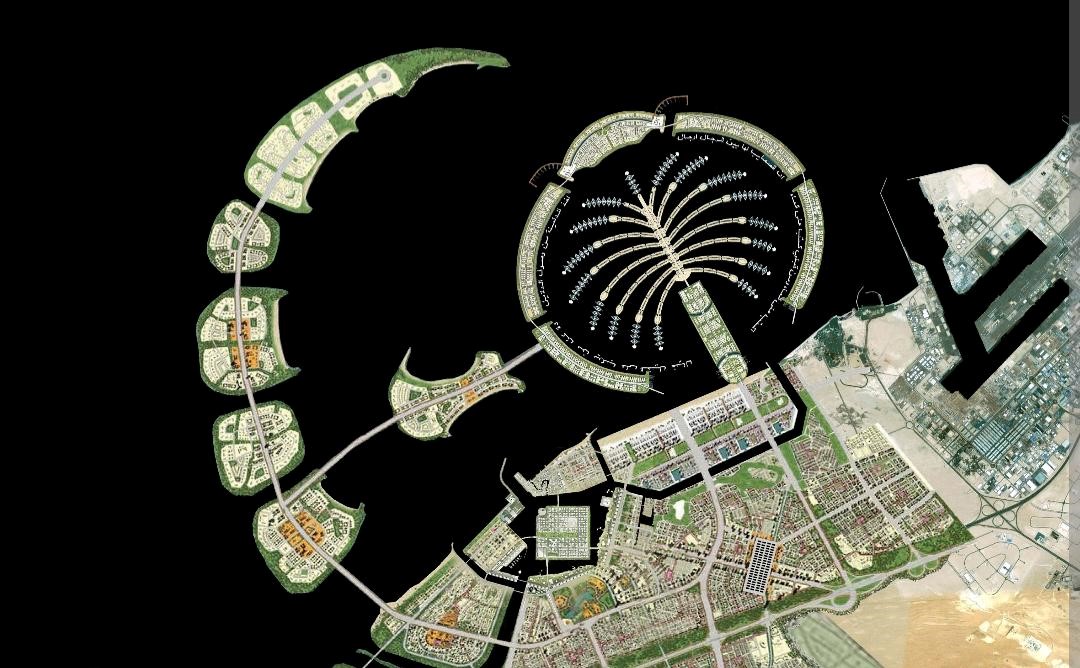
The Dubai waterfront is one of the most ambitious manmade project. It is designed to include several canals as well as several manmade island spanning the entire seaboard of Dubai reaching into the Persian Gulf. The master plan takes an optimistic view of future of urbanism and exploits two usually opposing elements of 21st century architecture. The development consists of an artificial Island linked to four distinct neighborhoods -Madinat Al soor, The Marina, and The Resorts – which together are twice the size of Hong Kong Island and yields a total floor space of 11.8 million m2 across various building types and programs.
Highlights:
Man-made canals and lagoons: Due to high demand, developers are creating artificial coastlines with lagoons to provide more waterfront properties, bringing the sea to inland areas.
Luxury living: Projects like Dubai Marina and Palm Jumeirah are renowned for offering luxury, privacy, and exclusive amenities.
Integrated lifestyles: These communities often blend high-end residential buildings with leisure facilities and social hubs, creating a resort-style atmosphere.
High demand and investment: Waterfront properties are highly sought after by both residents and international investors, often outperforming inland areas in terms of quality of life and property value.
Major developers: Prominent real estate developers such as Nakheel and Emaar Properties are responsible for many of these large-scale, landmark developments.
Specific projects: Iconic examples include the Dubai Marina, developed along a 3km stretch of the Arabian Gulf, and the massive Waterfront City masterplan by Nakheel, a 140,000,000 square meter development set on an artificial island.
Reasons for pause:
The Dubai Waterfront project was delayed primarily due to the 2008 global financial crisis and the subsequent Dubai World debt crisis in 2009. This led to a suspension of development and a financial restructuring for the developer, Nakheel, which forced the project to be scaled back and parts to be put on hold until market demand improved. Other general factors that cause construction delays, such as financial constraints, poor decision-making, and inadequate contractor management, are also relevant to delays in large-scale projects in Dubai.
Current Status:
Construction work on the project had been on hold since 2009 due to financial causes but work on Phase 1 of the project has been initiated once again with the developers expecting it to be completed by 2020. The entire project is expected to take more than 8 to 10 years for completion.
5. Aladdin City
Brief description:
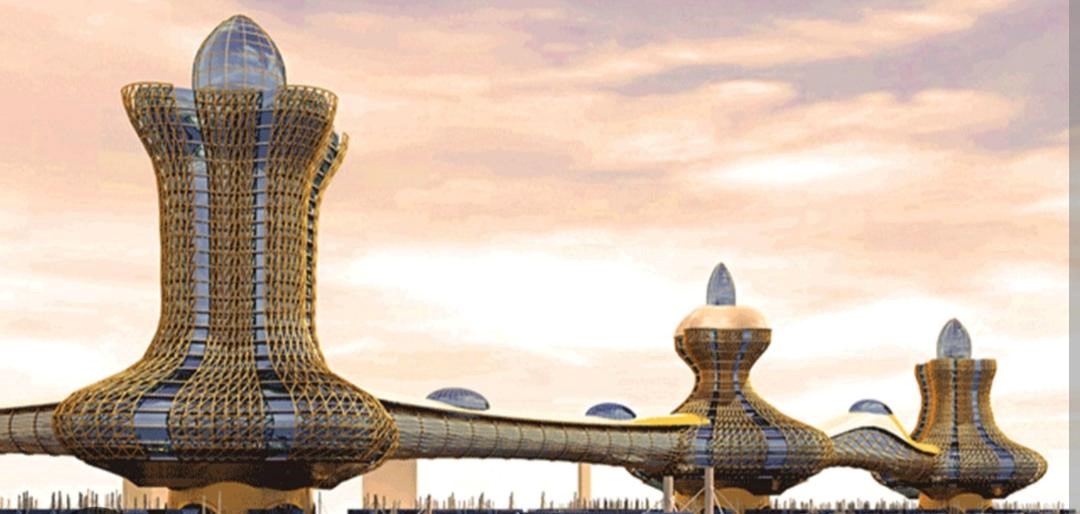
Located in the center of Dubai, Aladdin City is an architectural marvel inspired by the tales of Aladdin and Sinbad. Conceived by Dubai Municipality in 2014, the project features three interconnected towers shaped like Aladdin’s magic lamp, linked by bridges and air-conditioned walkways. The towers—rising 33, 24, and 25 stories—were designed to include offices, hotels, and parking for 900 cars, covering a gross floor area of 150,000 sq. m within a total site of 110,000 sq. m.
Highlights:
The development combines fantasy-inspired design with modern engineering. It includes 10,000 sq. m of bridges for smooth traffic flow and 66,000 sq. m of leasable space across the three towers. Each tower was envisioned to resemble a gilded lamp, connected by walkways designed to look like mythical creatures such as dragons and snakes.
The mixed-use complex was set to feature a 27-story hotel, 19-story apartment hotel, and 18-story office tower, supported by a 10-story parking structure. Located in Riggat Al Buteen, Deira, near the historic Dhow Wharfage on Dubai Creek, the project’s architecture was led by Architect International Design Studio (IDS) in collaboration with Meinhardt MENA.
Reasons for pause:
A combination of delays and potentially the bad economic climate is main reason of this project starting and closing.
Current Status:
The $500 million project was first announced in 2014, with initial plans for construction to begin in 2016. However, this project was canceled and stalled no recent update about this project published yet by developer.
Conclusion
Lessons & perspective:
These five projects illustrate that even in a city famed for bold urban experiments, large‑scale ideas must align with market demand, fiscal cycles, environmental constraints, and practical infrastructure realities. Several concepts were paused or reworked rather than outright abandoned — and many tangible benefits remain in lessons learned, improved planning frameworks, and selective delivery of components that fit Dubai’s evolving strategy.
